
 Peter Drucker famously said, “Every organisation must prepare for the abandonment of everything it does.” Here are examples of eight successful companies which switched from one activity to another in order to meet a customer need.
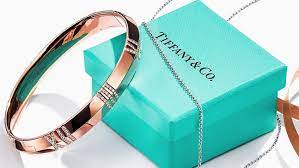
Tiffany was started in 1837 by Charles Tiffany and John Young, in Brooklyn, Connecticut, as a “stationery and fancy goods emporium”. In 1862, during the Civil War, the company supplied the Union Army with swords, flags and surgical implements. After the war Tiffany focused on jewellery. It is now renowned for its luxury goods and opulent stores. Tiffany was acquired by LVMH (Louis Vuitton) in 2021 for $16B.
Berkshire Hathaway was originally a textile manufacturing company established by Oliver Chace in 1839 in Rhode Island. The company went through many mergers and acquisitions in textiles but by the 1950s this old textile business was in decline and cutting back. A young entrepreneur, Warren Buffet, began buying stock in Berkshire Hathaway after noticing that the stock price fell whenever the company closed a mill. In 1962 he became the majority owner in this failing textile business. He used it as a vehicle to buy stakes in insurance companies and other businesses. By astute investing, Buffet grew the business in astounding fashion and Berkshire Hathaway became the largest financial services conglomerate in the world. In 2022 it had a market capitalisation of over $700B.
Nokia was founded in 1865 by mining engineer, Fredrik Idestam, as a wood pulp mill in Tampere, Finland which was then part of the Russian Empire. It became a manufacturer of rubber boots and cables before specialising in electronics. In the 1990s it focussed on telecommunications technology. From 1998 to 2008 it was the world’s largest supplier of mobile phones and smartphones but fell behind Apple and Samsung. It became a network equipment manufacturer.
Avon was founded by David McConnell in New York in 1886. Initially the business sold books door-to-door. McConnell gave samples of perfume as an incentive for book sales but found that demand for the perfume exceeded that for the books. He went on to focus on perfumes and cosmetics and built the Avon brand and empire based on an army of ‘Avon Ladies’ selling direct to customers.
Nintendo was started in 1889 as Fusajiro Yamauchi as a company to produce Japanese hanafuda playing cards. Nintendo produced its first console, the Color TV-Game, in 1977. It gained international success with its game Donkey Kong in 1981 and with Super Mario Bros. in 1985. It has gone on to sell a range of highly successful video game consoles including Game Boy, the Super Nintendo Entertainment System, and the Wii.
In 1891, a 29-year-old businessman, William Wrigley Jr. began a company in Chicago selling scouring soap and baking powder. As an incentive he offered two packages of chewing gum for each purchase of a can of baking powder. The chewing gum proved more popular than the baking powder, so Wrigley switched his focus to gum. The Wrigley Company is now the largest manufacturer and marketer of chewing gum in the world. In 2008 Mars Inc. acquired Wrigleys for $23B.
The toy company Hasbro was originally founded by three Polish-Jewish brothers, as Hassenfeld Brothers in Providence, Rhode Island, in 1923. The company sold textile remnants. The firm expanded to produce pencil cases and school supplies. They started selling toys in the 1940s and their first major success was called Mr Potato Head. The company now has revenues of over $5B and its products include Transformers, G.I. Joe, Power Rangers, Micronauts, Monopoly, Furby, Nerf, Twister, and My Little Pony.
Gap was founded by Donald Fisher in 1969 as a shop selling records and tapes alongside jeans. The name originates because Fisher targeted ‘the generation gap’. He was friends with Walter Haas, President of Levi Strauss. They agreed a deal whereby Fisher would stock only Levi’s jeans but in every style and size. The Gap stores guaranteed never to be out of stock because Levi’s gave them overnight replenishment. Gap expanded rapidly and in 1974 added its own branded merchandise. It went on to become the largest speciality retailer in the USA.
The lesson is clear. Find something that customers like and that you are good at. If that means shifting completely from today’s business model, then so be it.


Fab piece – brilliant as always!
You might include
APPLE
DELL
IBM
MS
too
interesting that you said as
Peter Drucker “FAMOSLY” said.
Interesting how a man who never produced a product or truly ran a company has been used as an expert.
Levi Strauss themselves! Switching tent material into jeans!
Closer to home Whtibread started as brewers but now own Costa and Premier Inn, but make no beer.